Analytics that change the next post, not just describe the last one.
CoreLayerEngine's analytics close the loop: results don't sit in a dashboard — they steer the engine. Set a growth goal, watch attribution follow every post to the click and the captured lead, benchmark competitors, and let the learning model do more of what demonstrably works.
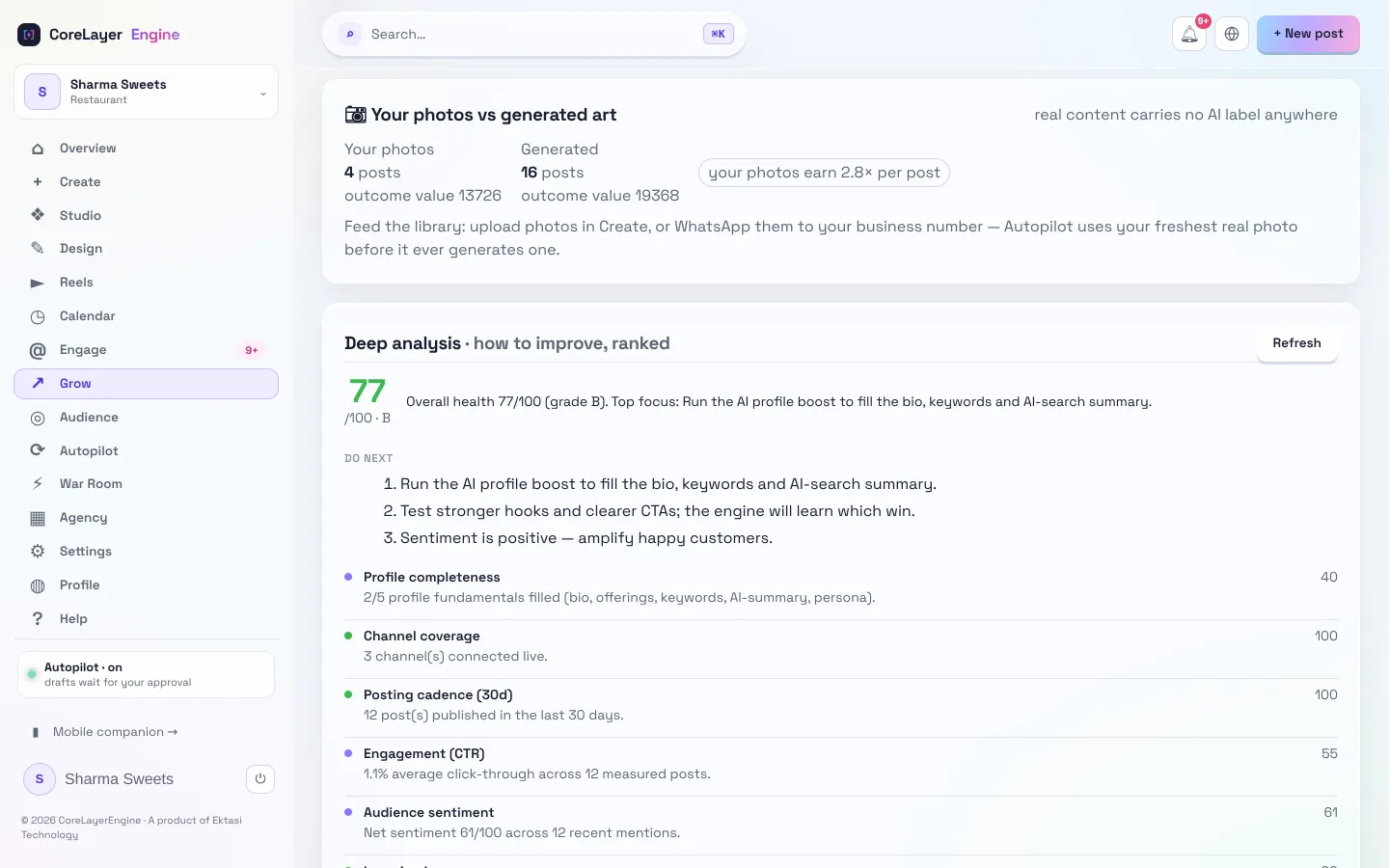
Screens on this page are real captures of the shipping console running the built-in demo workspace — a fictional Varanasi sweet shop, not a customer. The numbers on screen are seeded demo data.
What is a growth goal?
Tell the engine what to grow — leads, reach, sales — with a target and a horizon. From then on, ideation is scored against that objective, a progress bar tracks pace from real outcomes (not projections), and "plan my next moves" produces recommended actions. Recommendations only: nothing auto-posts from planning.
Can I see which post made the sale?
Yes — that's the attribution chain. Every published post carries a tracked link; clicks are recorded per channel and campaign; leads captured on your hosted lead page credit the exact post that brought them; and CRM webhooks push the lead onward. Multi-touch attribution shows the journey, not just the last click.
Attribution in CoreLayerEngine runs post → click → captured lead → CRM webhook, per channel and per campaign.
See how leads get captured →What does the health score measure?
One number for your entire presence, decomposed into profile completeness, channel coverage, posting cadence, engagement, sentiment, and AI-search visibility — each with a ranked "do this next" list. It's the first thing to check on Monday and the report your future self will thank you for.
How do competitor benchmarks work?
The engine auto-suggests competitors (or takes your list) and builds a share-of-voice report: volume, sentiment, cadence, positioning. Gaps become a prioritized checklist you can apply automatically or follow manually.
Deeper listening detail →Can it predict performance before publishing?
Yes. The predict step estimates a draft's likely reach and engagement bands, flags weaknesses, and suggests concrete improvements — before anything is public and before any ad spend. Autopilot drafts are additionally scored by a synthetic-audience model as a quality gate.
What arrives without me asking?
- ✓Daily digest — what published, what's pending, what needs you
- ✓Weekly rollup — results, learnings, next week's plan
- ✓Monthly executive summary — a PDF, delivered by email or WhatsApp
- ✓Best-time revalidation — schedules quietly improve as data accumulates
And when you want the raw numbers
Insights, time series, experiment results (Thompson-sampling win probabilities included), and CSV exports.
Frequently asked questions
How does CoreLayerEngine measure social media ROI?+
Through per-post attribution: every post carries a tracked link, clicks are logged per channel, and leads captured on your hosted lead page credit the originating post and campaign. Webhooks forward leads to your CRM, so revenue systems see exactly which content produced them.
What is the presence health score?+
A single score summarizing profile completeness, channel coverage, cadence, engagement, sentiment, and AI-search visibility, each sub-score with a ranked fix-first list. It turns 'how are we doing?' into one number and 'what should we do?' into an ordered checklist.
Does the engine actually use the analytics?+
Yes — that's the difference. Outcomes update a per-language, per-channel learning model that shifts future drafts toward winning tones, hooks, and formats. Best-time slots revalidate automatically. Analytics here aren't a report you read; they're an input the engine consumes.
Can I benchmark against specific competitors?+
Yes. Add competitors manually or accept auto-suggestions, then get share-of-voice, sentiment, and cadence comparisons plus a prioritized gap checklist. Benchmarks also inform ideation, so the engine proposes content in formats where rivals are visibly winning.
What reports can I send to a client or boss?+
A monthly executive-summary PDF, weekly rollups, the competitor report, attribution views, and the audit export. Agencies use the workspace rollup for portfolio reporting. All deliverable by email or WhatsApp on schedule — reporting that ships itself.
Set one goal. Let the engine report to you for a change.
Attribution included on every plan